API-first architecture meets AI. The future of scalable, intelligent applications
APIs enter the age of intelligence
Application Programming Interfaces (APIs) have long been the invisible glue that holds modern software ecosystems together. They allow applications to talk to each other, exchange data, and deliver seamless user experiences.
But in today’s fast-moving digital economy, just using APIs isn’t enough. The rise of API-first architecture, designing products with APIs at the core, has already revolutionized development speed, scalability, and flexibility. Now, with the integration of Artificial Intelligence (AI), we’re entering an even more powerful phase: intelligent, adaptive, and predictive applications built on robust API-first foundations.
What is an API-first architecture?
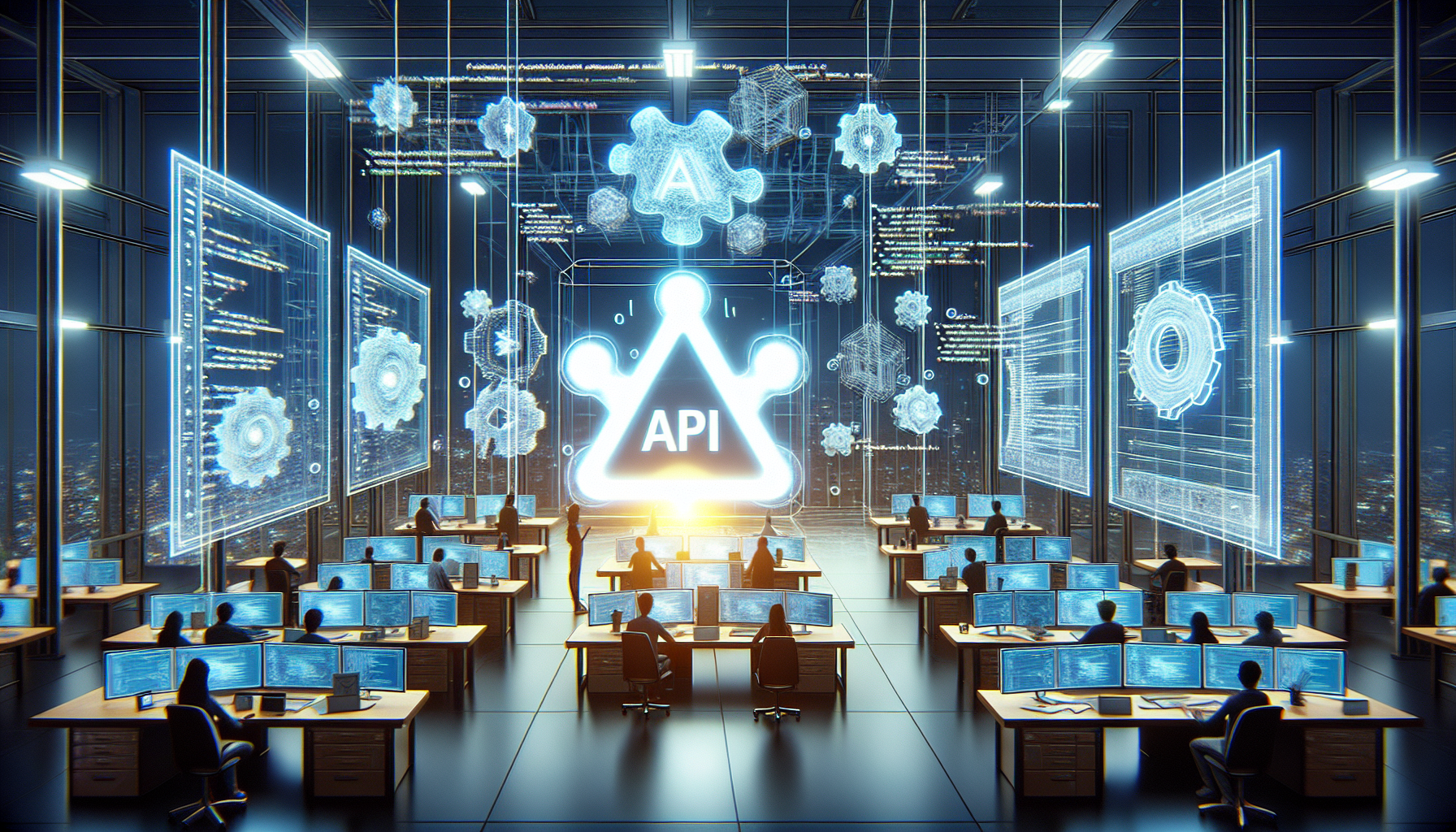
At its core, API-first means designing the API before writing application code. Instead of building an app and later figuring out how it connects with other systems, developers start with the interface. Think of it like constructing the bridges before building the roads, once the connections are solid, the rest of the infrastructure can scale quickly and safely.
Traditional Code-first versus API-first; With a Code-first approach, developers write functionality first, then patch APIs afterward, often messy and time-consuming. Whilst with an API-first approach, the API is designed upfront, ensuring that all services can connect smoothly from the start. This approach enables modularity, reusability, and speed, critical in today’s world where businesses must integrate multiple apps, platforms, and devices seamlessly.
With API-first, teams can work in parallel, accelerating development without creating bottlenecks. It also makes future integrations far easier, since the API acts as a stable contract between systems.
Why an API-first architecture is important
Forward-thinking companies are shifting to API-first because:
- Scalability. APIs can support ecosystems of apps across platforms.
- Efficiency. Teams reuse APIs instead of rebuilding from scratch.
- Faster Time-to-Market. Apps launch quicker, with fewer bottlenecks.
- Consistency. A unified design language makes apps predictable and reliable.
- Agility. Businesses can adapt to new technologies without massive rewrites.
Now, add AI into the mix, and these benefits multiply exponentially.
The role of AI in an API-first architecture
Artificial Intelligence supercharges API-first architecture in several ways:
AI-driven automation
AI can automatically generate API documentation, mock servers, and test environments. Natural Language Processing (NLP) enables developers to create APIs through voice or text commands, reducing manual work.
Predictive scaling
AI models analyze traffic patterns to predict demand and auto-scale APIs accordingly. This ensures applications remain reliable during peak usage without over-provisioning.
Smart integration
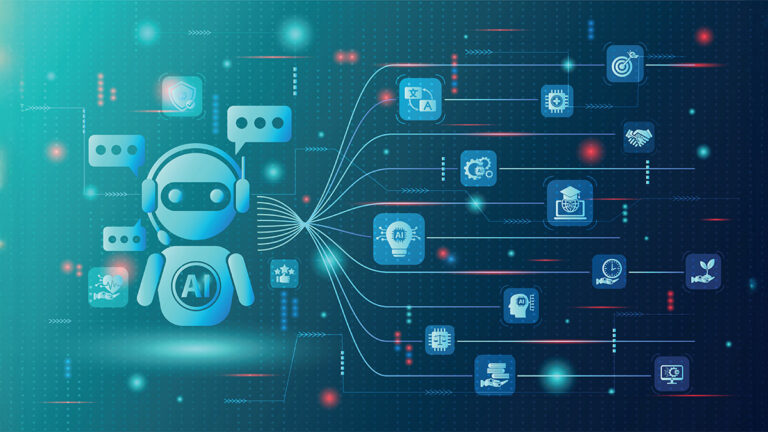
AI APIs (like vision recognition, chatbots, or recommendation engines) can be plugged into any system via an API-first design. Businesses can add intelligence to apps without reinventing the wheel.
Enhanced security
Machine learning detects unusual API traffic and prevents malicious attacks. AI-driven authentication strengthens identity verification across connected systems.
Developer productivity
AI coding assistants (e.g. GitHub Copilot or ChatGPT) can generate API endpoints, validate syntax, and suggest improvements. Development teams move faster, with fewer errors.
How to get started with API-first + AI
Here are practical steps to begin:
Identify core services: List the business functions that need API exposure. Then, establish an API contract (define how APIs behave, interact, and evolve), adopt consistent design rules (standardize error handling, versioning, and AI model integration).
After that, start automate processes. Use AI for API documentation, monitoring, and deployment. Whilst in the meantime implement governance (track API usage, security, and performance with AI monitoring tools).
Finalize with the creation of a Developer Portal to provide a one-stop shop for documentation, contracts, and AI-enhanced API tools.
The future: AI-native API ecosystems
As businesses embrace composable applications, apps built from reusable building blocks, AI will play a bigger role. Future trends include: Self-healing APIs that detect and fix failures automatically. Autonomous integration where AI discovers and connects APIs without human intervention, and AI marketplaces where businesses buy, sell, and plug in intelligent APIs instantly. AI-native ecosystems will reduce time-to-market dramatically, while lowering operational costs. They will also create smarter security models, adapting in real time to new threats. Most importantly, they give businesses the agility to innovate at scale without being slowed down by legacy complexity.
In short, AI + API-first stands for: Hyper-intelligent, scalable, and future-proof digital ecosystems!
Conclusion
The digital world is moving from apps to ecosystems, from Code-first to API-first, and from Automation to Intelligence. By merging API-first architecture with AI, businesses unlock a new era of speed, agility, and innovation.
Companies that embrace this shift won’t just build apps, they’ll build intelligent platforms that evolve, scale, and thrive in an AI-driven economy.
Interested in discussing this further? I’d be happy to connect.