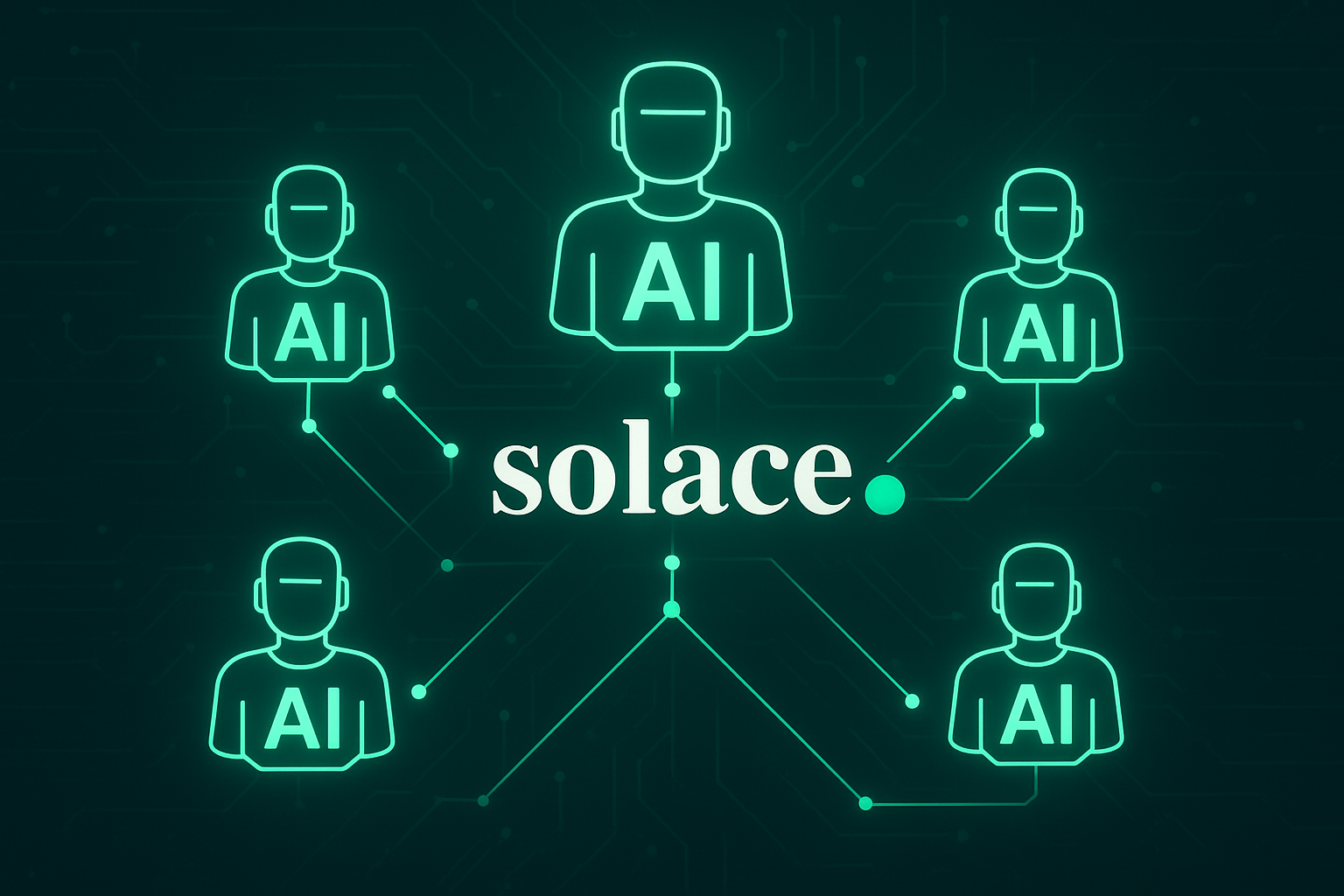
Solace, Agentic AI and Event Mesh: Shaping the future of an Intelligent Business
We are at the beginning of a new age of technology. AI has had some remarkable success in pilot projects and proof of concepts, but often struggled when it came to scaling up into businesses as a whole. Why was this? Because AI has always been viewed as a ‘solution’ that could be ‘bolted on’ to other systems that have never been designed for AI processing on a moment’s notice. All of this is about to dramatically reverse, thanks to Solace’s ‘event mesh’ and ‘agentic’ AI.
Essentially, an event mesh is all about connecting the world in real time. Today, point-to-point integration is based on inflexible and slow pipe architectures or is done via manual integration methods that lack scalability, resulting in siloed infrastructural systems that only move information through time- and scalability-constrained channels. Solace has established its roots as market leaders in this space, as they have powered some of the world’s biggest banks and organizations. Billions of messages every day move through Solace infrastructure, and this system is as dependable as it is powerful!
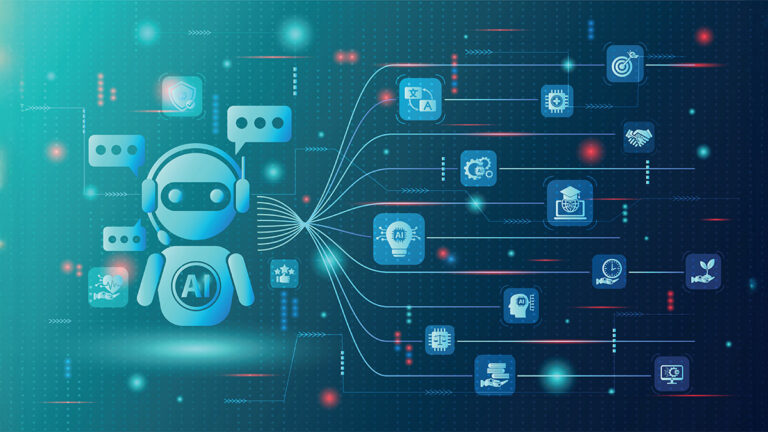
But now, imagine this powerful infrastructure combined with Agentic-AI. These are more than chatbots or static AI systems. They are autonomous digital assistants, meaning they can reason, act, and collaborate. There is an orchestrator that manages them, and they have autonomy to act and adapt based on events as they occur. They are all interconnected through an event grid and can respond, adapt, and innovate based on that grid.
But for entrepreneurs, the potential is staggering. In banking, for example, agential AI would be able to watch trades, identify anomalies, and verify compliance much faster than any human could, all while learning from events occurring on a real-time, continuous basis. In transportation, swarms of AI agential components would be able to, on a continuous, ongoing basis, search for ways to most effectively route, match demand and supply, and cut costs, all while keeping customer satisfaction high. In manufacturing, AI agential components would be able to continuously foresee equipment failure and, on an immediate, spontaneous reaction, alter production accordingly.
Market figures highlight this shift. The AI economy is predicted to surpass US$1 trillion by 2030, potentially contributing up to US$4.4 trillion each year to worldwide GDP. Inside this, agentic AI is one of the most rapidly expanding parts of this economy. At present, agentic AI is worth about US$7 billion by 2025/26, and this market is predicted to grow over six-fold, reaching US$40-50 billion by 2030 or potentially as large as close to US$200 billion by 2034 market figures suggest. Then, mix this growth trend with Big Tech spending of US$2.8 trillion on AI infrastructure development by 2029 and visualize a future that is dominated by agentic AI, fueling all those processes that could be helped by speed, intelligence, and autonomy.
It’s more than just an issue of efficiency, it’s about competitiveness. The companies that get this paradigm right will have a competitive edge, and they’ll be making decisions at lightning speed, and they’ll be innovating all of the time because they can instantaneously respond to changes, and only intelligent systems can keep up with that pace of the customer and market changes.
What is distinctive about Solace is that it enables this future. By providing a solid, dependable framework combined with all the flexibility of agentic AI, Solace enables not some new experiment, but a transformation platform that will enable businesses to scale AI in any and all business segments, and thereby build an enterprise that is not just automated but also made adaptive, and digital but intelligent as well.
History has always been defined by people who understood and adopted that next wave of technology at that optimal time. Solace’s vision of an ‘event-driven agentic AI’ brings us into a future of leaps that could be defined by always-on, autonomous, and ‘smart-growth’ businesses that just get ‘smarter every day.’ There is more to this than just technology because this is about ‘reshaping’ all of business as we compete, create, and deliver value through the 21st century of this ‘new world.’
The future of smarter business is being created today. Will you be ready to lead the way into that future?
Interested in discussing this further? I’d be happy to connect.